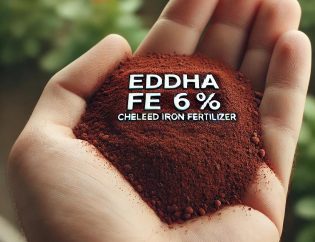
What is the difference between EDDHA and EDTA Chelates
Difference between EDDHA and EDTA Chelates in Agriculture
When choosing chelates to provide nutrients to plants, there are fundamental differences between EDDHA Chelates and EDTA Chelates, and the choice between them depends on the soil acidity (pH) and the method of application.
1- Definition of each type of chelate

EDDHA Chelates (Ethylenediamine dihydroxyphenylacetic acid Chelates)
1- It is mainly used to chelate iron (Fe-EDDHA).
2- It keeps iron available to the plant even in alkaline soils (pH from 7 to 11).
3- It remains for a long time in the soil, making it ideal for crops prone to iron deficiency (Iron Chlorosis).
4- More expensive than EDTA due to its high stability in alkaline soils.
Best Use:
When growing crops that require iron such as grapes, olives, citrus fruits and tomatoes.
In calcareous or alkaline soils where iron is not available to the plant. Application to the soil via irrigation systems or direct fertilization.
EDTA Chelates (Ethylene Diamine Tetraacetic Acid Chelates)

1- Used to chelate several trace elements, including iron (Fe-EDTA), zinc (Zn-EDTA), copper (Cu-EDTA), and manganese (Mn-EDTA).
2- Effective only in neutral to acidic soils (pH 4 to 7), but loses its effectiveness quickly in alkaline soils.
3- Suitable for application via foliar spray or irrigation systems, as the elements are quickly absorbed.
4- Less expensive than EDDHA, but not effective in alkaline soils.
Best Use:
Acid or neutral soils that do not suffer from high alkalinity. Foliar fertilization or fertilization via drip irrigation systems. Provides other trace elements such as zinc, manganese and copper, not just iron.
| Feature | EDDHA Chelates | EDTA Chelates |
|---|---|---|
| Chelated Elements | Iron (Fe) only | Iron (Fe), Zinc (Zn), Copper (Cu), Manganese (Mn) |
| Effectiveness in Soil pH | 7 - 11 (Alkaline Soil) | 4 - 7 (Acidic or Neutral Soil) |
| Element Stability Duration | Long-lasting (Iron remains available for a long time) | Short-lived (Loses effectiveness in alkaline soils) |
| Application Method | Direct soil application | Foliar spraying or fertigation |
| Cost | Higher due to extended stability | Lower cost but effective only in specific conditions |
3- When to choose EDDHA or EDTA?
1- If the soil is alkaline (high pH) ➝ Use EDDHA Fe.
2- If the soil is acidic or neutral ➝ Use EDTA Fe or Zn or Cu or Mn.
3- If you want to foliar or irrigation ➝ Use EDTA.
Conclusion: Which is better?
EDDHA Chelates is ideal for iron in alkaline soils, but it is expensive.
EDTA Chelates is better for other trace elements and foliar fertilization, but it does not work well in alkaline soils.
Want to know which product is best for your crops? Contact us via email  dana@danatekco.com